

We study various aspects of ecology, biology and diversity of insects associated with woodlands together with processes affecting their habitats and survival. Our research combines entomology, ecology, forestry and GIS methods in order to contribute to rational, evidence-based conservation of biodiversity. To facilitate for information flow between the academic and the "real" worlds we also collaborate with various NGOs, state organizations, land owners and media.

23. 11. 2026

The Ghost of Czech Forests: New Insights into European Wildcat Conservation
On 19 November 2026, Simona Poláková attended the final conference of the project Population Status Assessment and Conservation Genetics of the European Wildcat as a Flagship Species for Biodiversity Conservation, held in Kyselka, Czech Republic. Simona serves as an expert rapporteur for the Technology Agency of the Czech Republic (TA ČR), providing independent expert assessment of the project's progress and results.

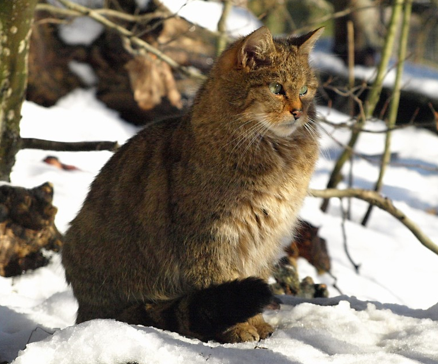
Often described as the ghost of the forest due to its elusive nature, the European wildcat (Felis silvestris) is gradually reclaiming its place in Czech forests. The conference presented findings on its distribution, population size, genetic diversity and ecology. Researchers shared results from extensive camera-trap monitoring, genetic analyses and GPS telemetry, providing valuable insights into the species' ongoing recolonisation of the country.

The event concluded with a discussion of future research priorities, monitoring strategies and conservation measures needed to support the long-term recovery of this elusive and critically endangered species in the Czech Republic.
18. 11. 2026

Fire history meets soil arthropod communities in the Canary Islands
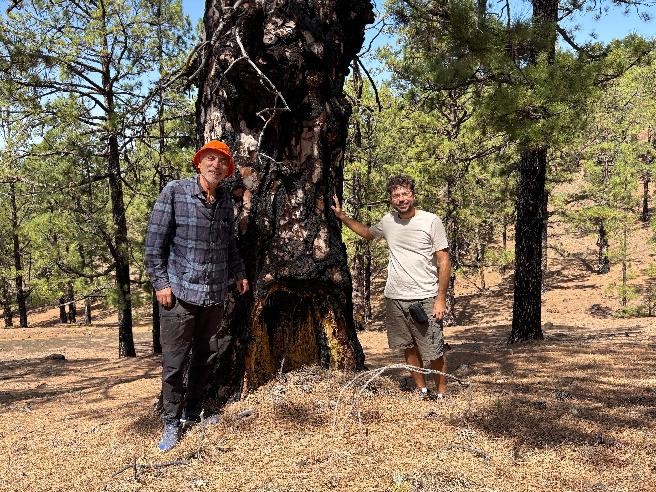
Gioele Moro, currently visiting IPNA-CSIC in Tenerife, Spain, is using whole-organism community DNA metabarcoding to study how communities reassemble after fire in different forest types and climatic regions, focusing on overlooked groups such as flying insects and soil arthropods.
He recently hosted Dr. Igor Drobyshev from the Swedish University of Agricultural Sciences (SLU), a dendrochronologist who studies fire regimes in the Boreal region and is interested in extending his studies on the fire regimes in Pinus canariensis forests. Together, they visited new potential study sites on the islands of Tenerife and La Palma. 
The plan is to reconstruct the fire history of the sites where arthropod communities will be sampled, which will allow us to look for signals of fire adaptations in arthropod communities of Pinus canariensis forests. The sites have now been selected, and sampling can begin.
| Author: G. Moro

13. 11. 2026

Visiting Belgium
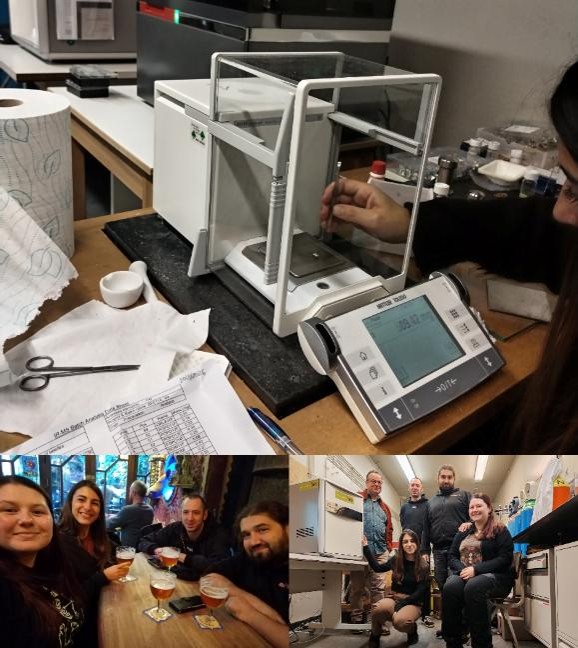
From November 2 to 6, Pavel Šebek, Daria Congia, and Michaela Kozlová visited the University of Liège in Belgium to meet with Prof. Gilles Lepoint, discuss the progress of the project, and plan the next isotope experiments. Petr Kozel is currently undertaking a postdoctoral fellowship at the university.
| Author: M. Kozlová