Nesting ecology of cavity-nesting bees, wasps and their natural enemies
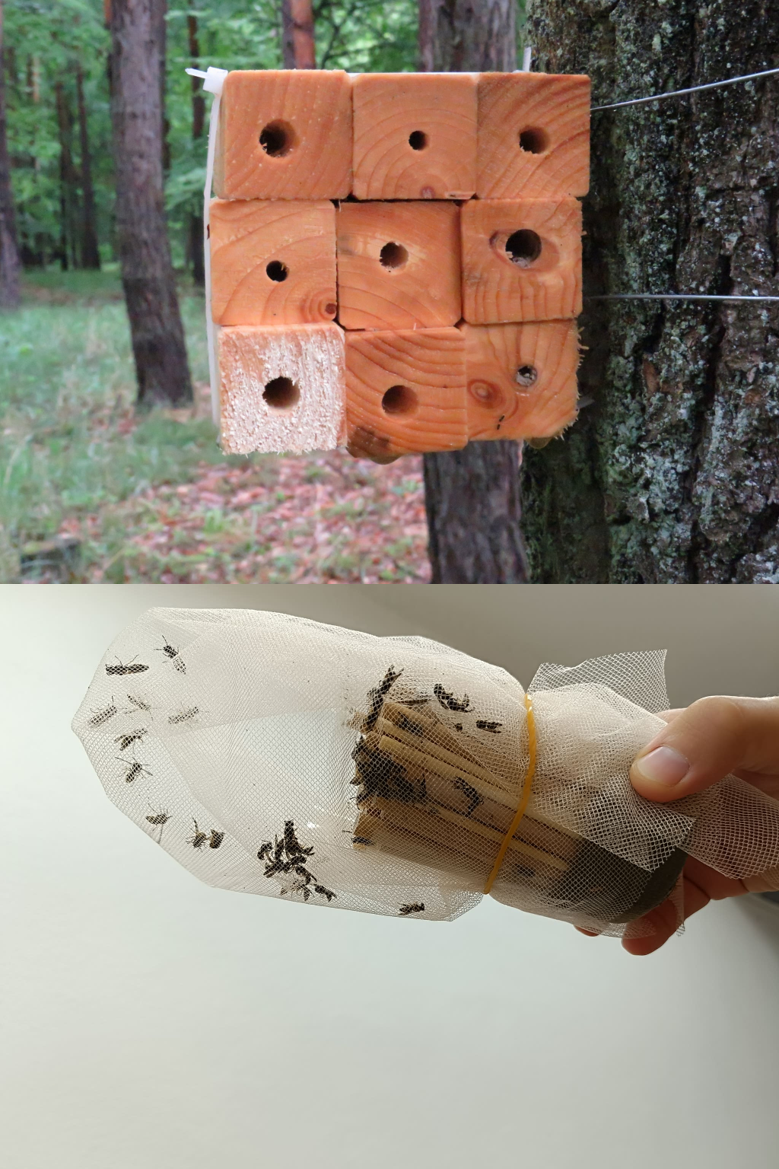
The biodiversity of many hymenopteran pollinators and predators is threatened not only by declines in the quality and quantity of food resources, but by the limited availability of suitable nesting sites as well. Because nesting and food resource requirements are closely interlinked, we focus on nesting communities of bees, wasps, and their natural enemies at sites where natural or man-made disturbances have changed local conditions. Communities of cavity-nesting bees and wasps can tell us a lot about species diversity, survival rates, parasitism and the use of locally available food resources. By using trap-nests (artificial nesting opportunities), we are able to effectively assess the attractiveness of an environment for nesting of hymenopterans and thereby inform future management and conservation actions targeting this ecologically vital group of insects.
Members involved
Michal Perlík
Related papers
Microbiotope selection in saproxylic bees and wasps (Hymenoptera, Aculeata): cavity-nesting communities in forests and wooded pastures are affected by variation in openness but not deadwood.Perlík M. et al. 2024, Journal of Insect Conservation.
Canopy openness as the main driver of aculeate Hymenoptera and saproxylic beetle diversity following natural disturbances and salvage logging.Perlík M. et al. 2023, Forest Ecology and Management.
Biology Centre CAS Institute of Entomology Branišovská 31 370 05 České Budějovice Czech Republic