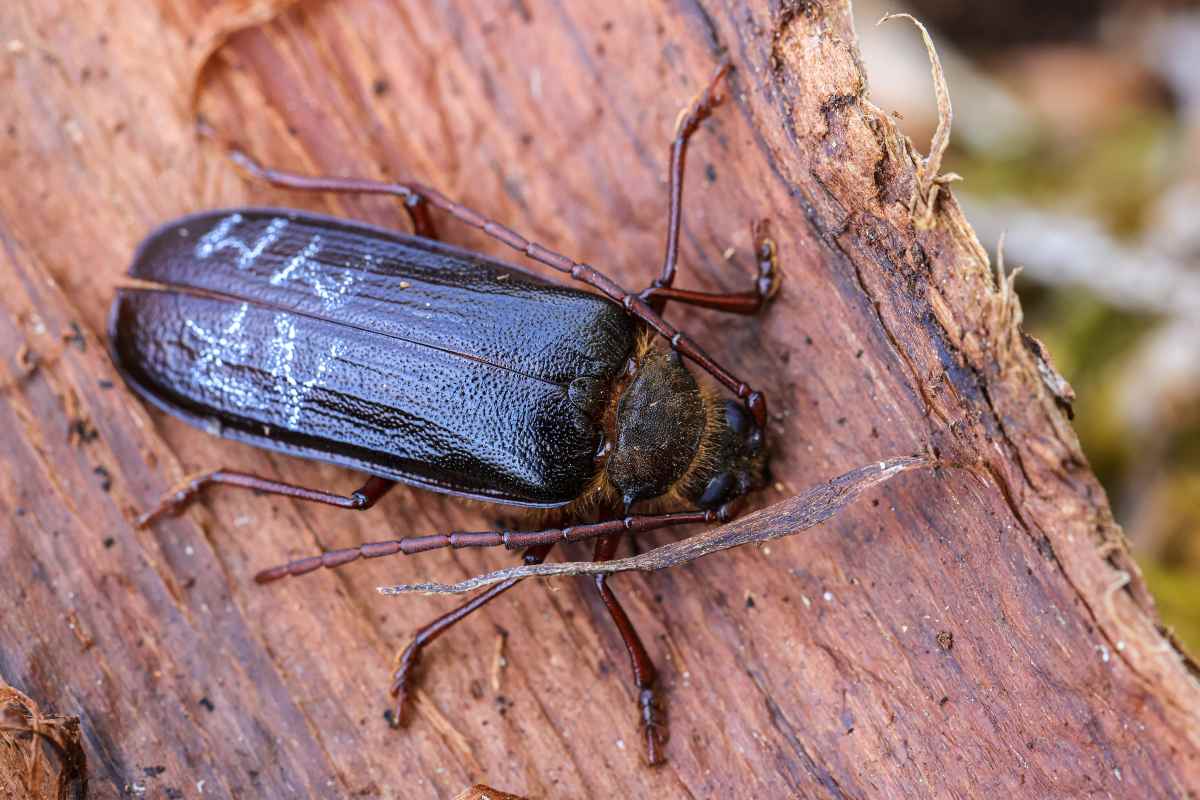
The longhorn beetle Tragosoma depsarium is one of the rarest saproxylic beetles of Central Europe, often nicknamed the “entomological Blue Mauritius” due to its exceptional rarity and conservation value. In the Czech Republic, Šumava National Park represents one of the very few regions where this species can persist in the long term. It is currently listed as critically endangered on the Red List of Threatened Species and is legally protected as a highly threatened species. The main threat to its survival is the gradual loss of suitable habitats in higher elevations (above 1000 m a.s.l.). On Šumava, its populations are further impacted by the dieback of spruce stands following bark beetle outbreaks and subsequent clear-cut forestry practices.
This species is closely tied to old, decaying coniferous wood in natural mountain forests. It inhabits standing dead trees, stumps, and fallen logs of spruce and pine. The beetle prefers sun-exposed, south-facing trunks that are partially debarked and have a hardened surface, while still maintaining contact with the ground, which ensures sufficient moisture rising from the soil. Adults are active from late June to August, with peak occurrence in the second half of July. They are primarily crepuscular and nocturnal, remaining hidden under bark or in dead wood during the day.
Recent research has shown that individuals are capable of actively dispersing over distances of several hundred meters, which is an important finding for conservation planning and habitat connectivity. Long-term monitoring has confirmed that the population in Šumava remains viable and has even been recorded at newly colonized sites, highlighting the importance of preserving and restoring suitable deadwood habitats within the landscape.
Biology Centre CAS Institute of Entomology Branišovská 31 370 05 České Budějovice Czech Republic